Inspired by The Bow

Inspired by The Bow

Just steps from the brick-lined streets of Portsmouth’s historic center, the former Ale House Inn has transformed into something entirely new: The Bow Hotel. A thoughtful, design-forward space with an industrial soul and artistic edge, The Bow is the latest addition to Portsmouth’s hospitality scene, and it’s already making waves.

At the creative helm is Meg Kennedy, Principal Designer at Elder & Ash Design Studio, whose portfolio is defined by refined textures, layered storytelling, and a clear sense of place. Her work at The Bow honors the building’s historic roots while offering guests something completely fresh and utterly artful.

We sat down with Meg to learn more about the creative process behind the hotel’s transformation and how she approached turning a former factory into one of the Seacoast’s most inspired places to stay.

Meet Meg Kennedy

Artist, Designer, Visionary, Wife, Mom, and so much more

A person creates a collage on a brick wall in Portsmouth, NH
An artist in red glasses sits among her abstract paintings in Portsmouth, NH

As a designer and storyteller, what does this project mean to you personally, and how do you hope it contributes to the evolving design identity of Portsmouth?

“This has been a favorite project because of our love for art—creating it in all forms, experiencing it, living it. It was interesting, especially to work toward keeping the rooms simple and clean while trying to be artful all at once. We like to continue to challenge ourselves to create things that we haven’t, and to try to let the building tell us what it needs, so it was fun seeing this come to life. Also—the connections we hope to foster with the creative community in Portsmouth and beyond are very exciting for us in a long-term way.”

What was your initial inspiration for the redesign of The Bow Hotel, and how did the history of the former Ale House Inn influence your creative direction?

“The initial inspiration of the redesign came from the industrial surroundings both in and around the building. A working wharf outside, a former factory inside. The unique details of the building spoke to what it wanted to be. Portsmouth has a unique creative heartbeat, and we felt that there was an opportunity to add to that here at the Bow. While there are many charming places to stay, we were inspired to tap into the creative collective of Portsmouth and try to represent it further in some way. We aim for the Bow to feel fresh and inspiring, artful and interesting.”

The Bow Hotel has such a distinctive character. What mood or feeling were you hoping to evoke for guests the moment they walk through the door?

“Comfort, as always. We want people to settle in, but also to be inspired. We want people to think and discover, but also give them space to clear their minds.”

What do you hope guests take away from their stay, not just in terms of comfort, but in the memories or inspiration the space leaves them with?

“We hope guests are inspired to explore the more unexpected elements of Portsmouth and the Seacoast. We hope they will be inspired to check out galleries and performances, and artful food experiences. While there is so much history in Portsmouth, there's also an extremely interesting contrast of modern experiences. We hope to be a place where artists and creatives feel inspired, but also simply any human who likes to shake things up every now and then.”

You’re known for your thoughtful use of textiles. Can you share a bit about your approach to layering textures and fabrics throughout the space?

“Whenever we do something that’s a bit more muted, we find it to be extra important to add texture. This comes in the form of fluted woods, pleated bed fabrics, and plush carpets. The subtle variation keeps it interesting without overwhelming the senses. Our main moment is the magazine wall in the common area—we hope people will enjoy it over and over, discovering something new each time they look at it.”

Can you walk us through your design process, from concept to completion, for this project? Were there any unexpected turns or discoveries along the way?

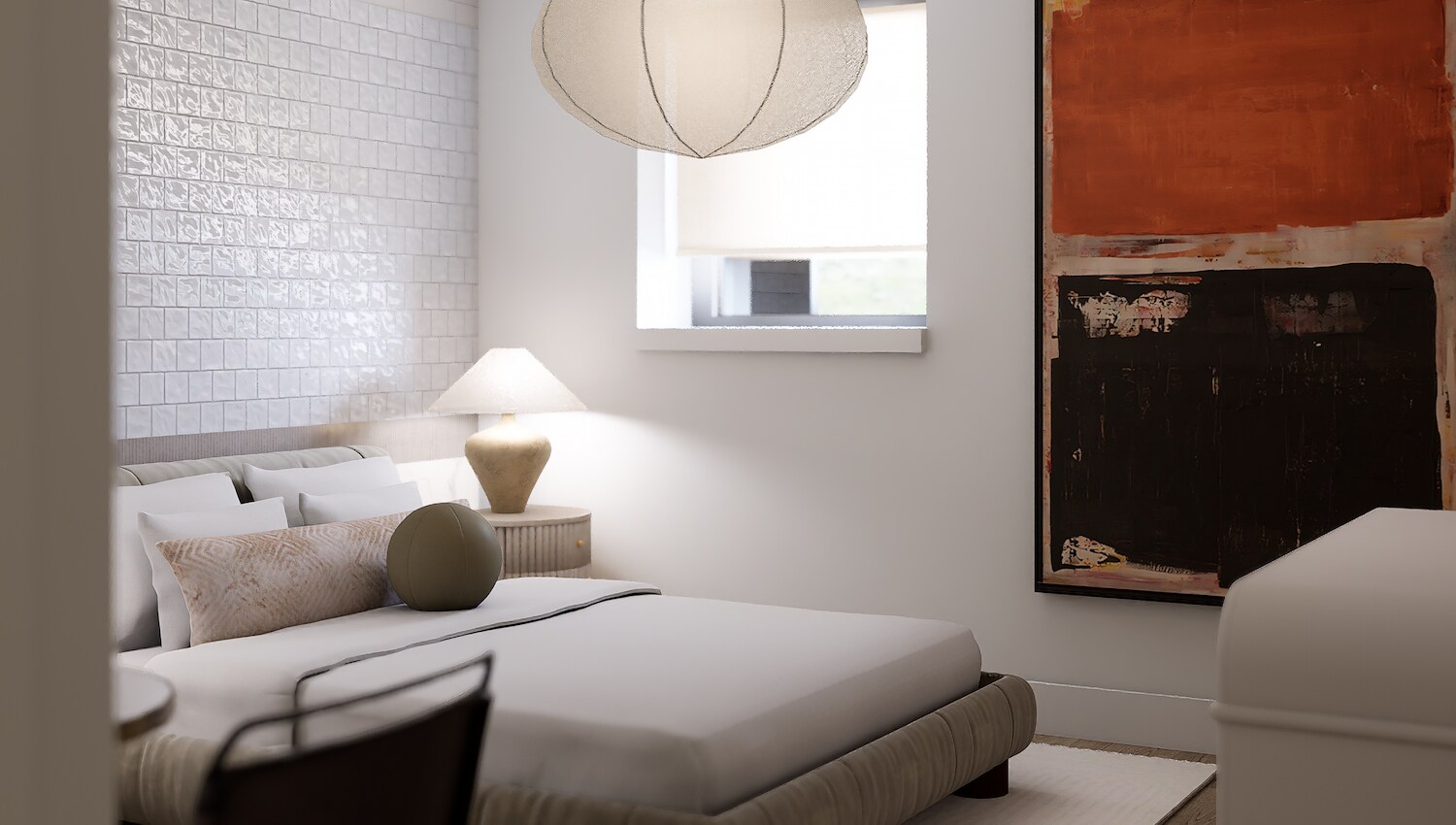
“This process was actually as seamless as they come. Our main design element was tile, and the use of tile to create art. We chose to use tile this way as a nod to the loft-like feel and industrial elements, but we wanted to represent it in a way that is unique to today. Tile walls are the focal piece of the room—they aren’t intended to look as if they’ve always been there, but we hope they live on well into the future as a unique element that lends to the overall character of the building as it continues to mark its place in history. Once that main point of distinction was decided, the rest was done to complement this element. The rest of the room is intended to be serene and gallery-like, with just one large statement art piece to be able to study and enjoy.”

 How do you balance design that feels timeless with elements that are fresh, unexpected, or even a little edgy?

“We feel like timelessness can only come in the form of things that will remain interesting forever. So timelessness for us is not safe or expected—it’s quite the opposite. For this hotel in particular, we try to achieve this by turning the mundane into art. For example, the hallway. The main hall is a long corridor simply with doors on each side. We looked to this to become a piece of experiential art in itself. By creating an optical illusion using the shape of the hallways and only black, white, and lighting, we hope it strikes our guests as an interesting piece of abstract art that they can experience by walking through. So is this timeless? We don’t know, but we do know that we enjoy art in all forms and from all time periods, including those well passed.”

The Bow Hotel is more than a new place to stay, it’s a living canvas, shaped by its surroundings and crafted by a team that believes design should both soothe and spark. Thanks to Meg Kennedy and Elder & Ash Design Studio, it does exactly that.

Photography by [Sasha Isreal]